Ensuring Aircraft Safety Without Damaging Critical Components
Aircraft safety depends on the integrity of every structural component, engine part, and mechanical system. Even the smallest crack, corrosion spot, or material defect can compromise performance and increase safety risks if left undetected.
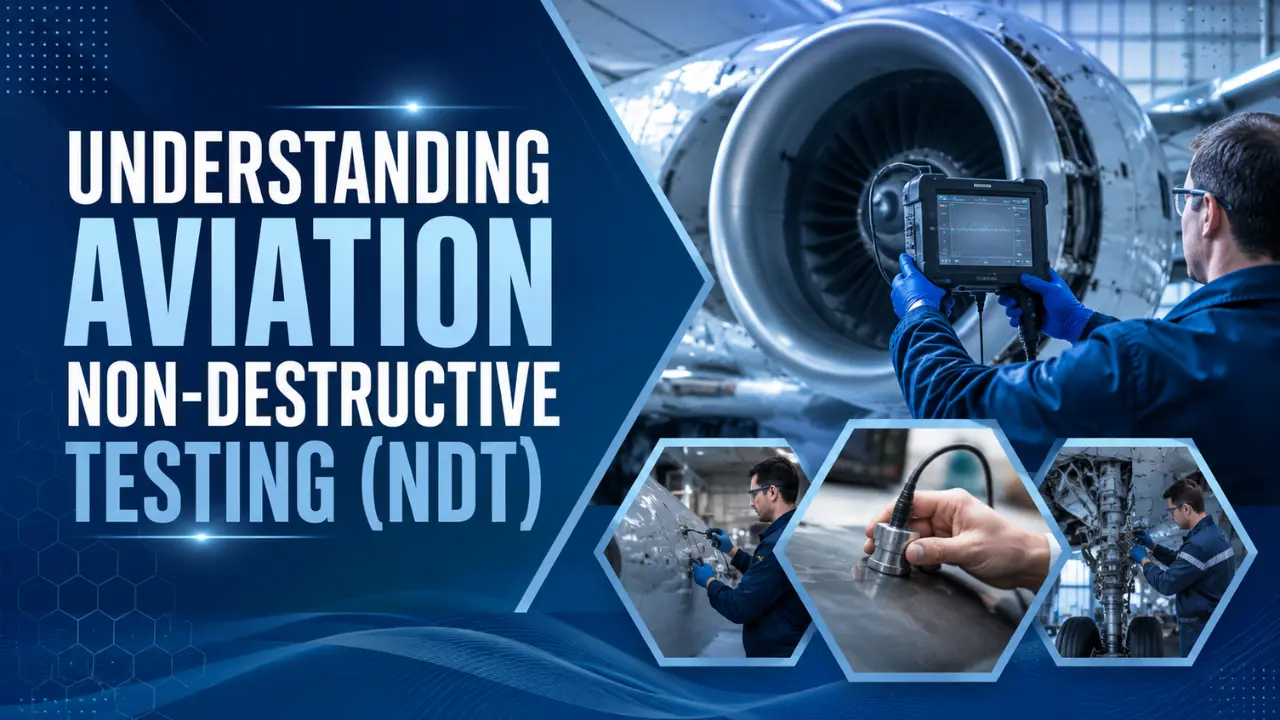
Non-Destructive Testing (NDT) is one of the most important inspection methods in the aviation industry. It enables maintenance professionals to identify hidden defects without causing damage to the aircraft or its components. By detecting potential issues early, NDT helps improve safety, maintain regulatory compliance, reduce maintenance costs, and extend the lifespan of valuable aircraft assets.
What Is Aviation Non-Destructive Testing (NDT)?
Non-Destructive Testing (NDT) is a group of inspection techniques used to examine aircraft structures, components, and materials without altering or damaging them.
Unlike destructive testing, which requires destroying or altering a sample, NDT allows components to remain in service after inspection while providing highly accurate information about their condition.
NDT is widely used during:
- Scheduled aircraft maintenance
- Pre-purchase inspections
- Major overhauls
- Structural repairs
- Manufacturing quality control
- Component certification
- Accident investigations
Why Is NDT Essential in Aviation?
Modern aircraft experience continuous stress during flight, including pressure changes, vibration, temperature fluctuations, and repeated loading cycles. Over time, these factors can lead to hidden defects that are not visible during routine visual inspections.
Aviation NDT helps detect:
- Surface cracks
- Internal fractures
- Corrosion
- Material fatigue
- Bonding defects
- Weld imperfections
- Structural damage
- Manufacturing flaws
Early detection allows maintenance teams to address problems before they develop into major safety issues or expensive repairs.
Common Aviation NDT Methods
1. Ultrasonic Testing (UT)
Ultrasonic Testing uses high-frequency sound waves to detect internal flaws and measure material thickness.
It is commonly used for:
- Aircraft fuselage inspections
- Wing structures
- Landing gear components
- Composite materials
- Engine components
Advantages
- Detects hidden internal defects
- High inspection accuracy
- Excellent for thick materials
- No damage to inspected components
2. Eddy Current Testing (ECT)
Eddy Current Testing uses electromagnetic fields to identify surface and near-surface defects in conductive materials.
It is particularly effective for:
- Detecting fatigue cracks
- Fastener hole inspections
- Corrosion detection
- Surface defect analysis
Advantages
- Fast inspection process
- Highly accurate
- No surface preparation required
- Ideal for aircraft aluminum structures
3. Magnetic Particle Testing (MPT)
Magnetic Particle Testing is used on ferromagnetic materials to locate surface and slightly subsurface cracks.
Common applications include:
- Landing gear
- Engine shafts
- Steel components
- Aircraft hardware
Advantages
- Excellent crack detection
- Simple inspection procedure
- Highly reliable for steel components
4. Liquid Penetrant Testing (PT)
Liquid Penetrant Testing involves applying a visible or fluorescent dye to reveal tiny surface cracks that may not be visible to the naked eye.
It is commonly used for:
- Aircraft engine parts
- Aluminum components
- Weld inspections
- Precision-machined parts
Advantages
- Cost-effective
- Easy to perform
- Highly sensitive to surface defects
5. Visual Testing (VT)
Visual Testing is the first step in most aircraft inspections. Certified inspectors use specialized lighting, mirrors, magnification tools, and borescopes to examine aircraft structures.
Visual inspections help identify:
- Corrosion
- Loose fasteners
- Physical damage
- Wear
- Fluid leaks
- Surface defects
Although simple, visual inspection remains one of the most important maintenance procedures.
Benefits of Aviation NDT
Implementing regular Non-Destructive Testing programs provides significant operational advantages.
Improved Safety
Detecting defects before failure reduces the risk of in-flight incidents and enhances passenger and crew safety.
Regulatory Compliance
NDT helps operators comply with aviation regulations established by authorities such as FAA, EASA, and national aviation authorities.
Reduced Maintenance Costs
Early defect detection prevents small problems from becoming expensive structural repairs.
Extended Aircraft Lifespan
Routine inspections help preserve structural integrity and maximize the service life of aircraft components.
Increased Aircraft Availability
Preventive inspections reduce unexpected maintenance events and improve fleet reliability.
Industries That Rely on Aviation NDT
Non-Destructive Testing supports a wide range of aviation sectors, including:
- Commercial airlines
- Business aviation
- Military and defense
- Helicopter operators
- Aircraft manufacturers
- Maintenance, Repair & Overhaul (MRO) facilities
- Government aviation agencies
The Role of Certified NDT Inspectors
Effective inspections require experienced professionals trained in internationally recognized standards.
Certified NDT inspectors:
- Follow approved inspection procedures
- Interpret test results accurately
- Maintain inspection documentation
- Ensure regulatory compliance
- Recommend corrective actions when defects are detected
Their expertise plays a critical role in maintaining aircraft safety and operational reliability.
Emerging Technologies in Aviation NDT
The aviation industry continues to adopt advanced inspection technologies that improve accuracy and efficiency.
Modern innovations include:
- Digital ultrasonic testing
- Phased array ultrasonic inspection
- Automated robotic inspections
- AI-assisted defect recognition
- Drone-assisted aircraft inspections
- Digital inspection reporting
- Predictive maintenance analytics
These technologies enable faster inspections while improving the reliability of maintenance decisions.
Why Choose Ameau Industries
At Ameau Industries, we provide professional Aviation Non-Destructive Testing (NDT) solutions designed to support safe, compliant, and efficient aircraft operations.
Our experienced specialists utilize industry-approved inspection techniques, advanced equipment, and internationally recognized standards to identify structural defects without compromising component integrity. Whether supporting routine maintenance, pre-purchase evaluations, or major overhauls, we deliver reliable inspection services that help operators reduce risk, maintain compliance, and extend aircraft service life.
Final Thoughts
Non-Destructive Testing is a cornerstone of modern aircraft maintenance. By identifying hidden defects before they become critical failures, NDT helps ensure aircraft remain safe, reliable, and compliant throughout their operational lifecycle.
Regular inspections performed by qualified professionals not only improve safety but also reduce maintenance costs, increase aircraft availability, and protect valuable aviation assets. For operators committed to operational excellence, investing in high-quality NDT services is an essential part of long-term fleet management.